

Drywall Mold Removal in West Covina, CA
West Covina's older homes often feature vented crawl spaces where ground moisture accumulates, and the San Gabriel Valley's persistent morning and evening humidity—sustained by irrigation and marine-layer moisture—creates conditions where drywall can absorb and retain moisture long after water intrusion occurs. Drywall mold removal requires swift identification and containment to prevent spore migration through indoor air and structural damage that compromises wall integrity. Chapman Mold Remediation connects West Covina property owners with local independent providers who assess affected drywall, safely remove contaminated sections, and restore healthy indoor air quality.
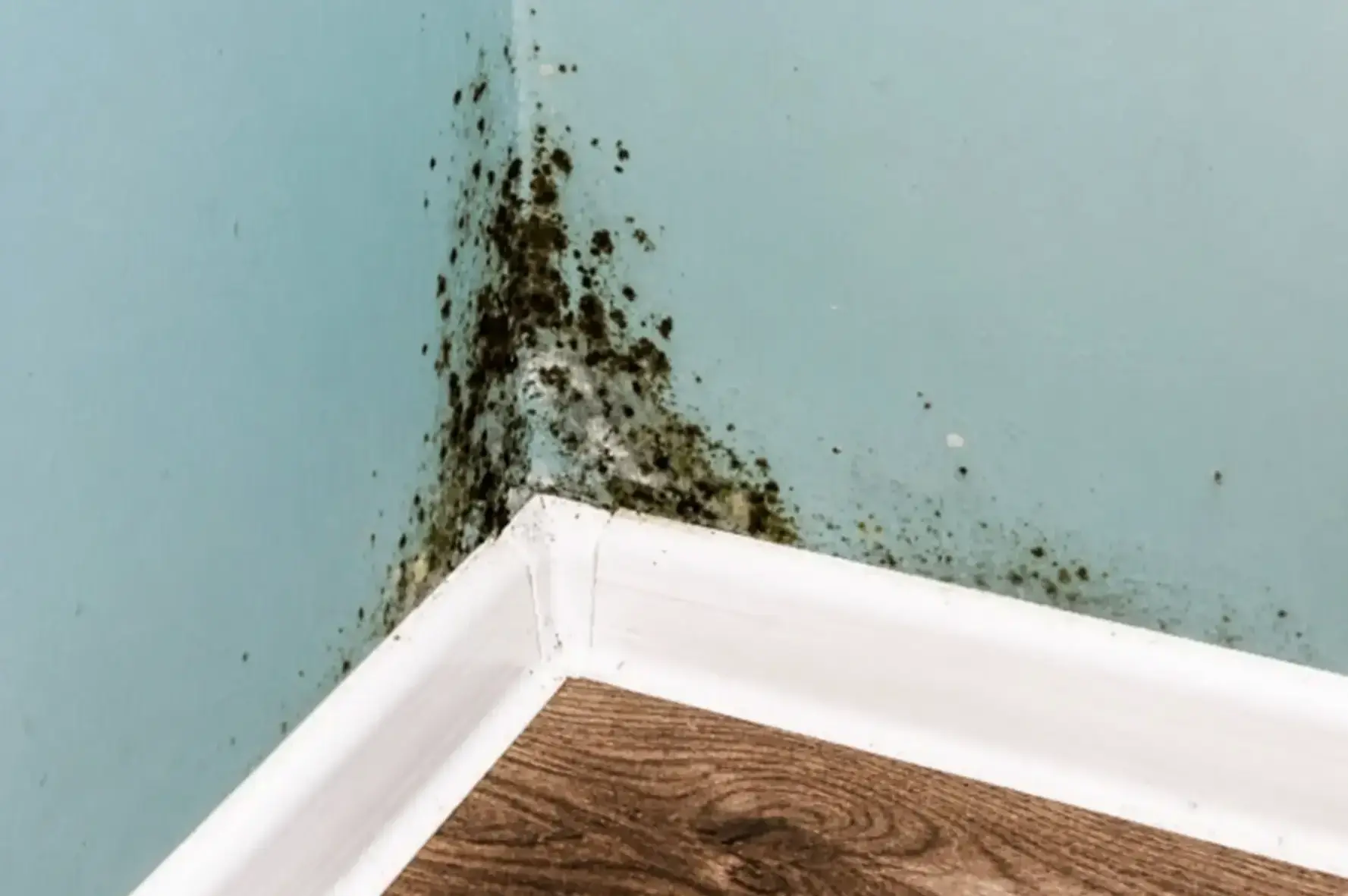
What gets cleaned in a wall cavity, and what comes out
The honest answer to “does this come out, or can it be cleaned?” turns on two things — what the material is, and how many square feet are affected. Those are the two axes of the EPA’s own remediation table, reproduced below for the materials usually found in a wall cavity.
| Material | Under 10 sq ftabout a cabinet door, or one ceiling tile | 10 to 100 sq ftroughly one wall, or a small bathroom | Over 100 sq ftmore than one room's worth of surface |
|---|---|---|---|
| Wallboardthe wallboard itself, both facesEPA, Table 2 | HEPA vacuum | HEPA vacuumRemove and discard | HEPA vacuumRemove and discard |
| Wood surfacesstuds, plates and sheathing behind itEPA, Table 2 | Wet vacuumDamp wipeHEPA vacuum | Wet vacuumDamp wipeHEPA vacuum | Wet vacuumDamp wipeHEPA vacuumRemove and discard |
What those methods mean, in EPA's words
- Wet vacuum
Wet vacuums are vacuum cleaners designed to collect water. They can be used to remove water from floors, carpets and hard surfaces where water has accumulated.
EPA, cleanup methods- Damp wipe
Mold can generally be removed from nonporous (hard) surfaces by wiping or scrubbing with water, or water and detergent.
EPA, cleanup methods- HEPA vacuum
HEPA (High-Efficiency Particulate Air) vacuums are recommended for final cleanup of remediation areas after materials have been thoroughly dried and contaminated materials removed.
EPA, cleanup methods- Remove and discard
Building materials and furnishings that are contaminated with mold growth and are not salvageable should be double-bagged using 6-mil polyethylene sheeting.
EPA, cleanup methods
Removed and replaced, whatever the area
- Fiberglass or other insulation — batt or blown insulation in the stud bay.
Fiber glass, or any other insulation material that is wet or visibly moldy (or if an unacceptable odor is present) should be removed and replaced by a qualified heating and cooling system contractor.
EPA, air duct cleaningEPA states this in its heating-and-cooling guidance and it is quoted here as written. Its water-damage table reaches the same conclusion for both fiberglass and cellulose insulation.
These guidelines are for damage caused by clean water. If you know or suspect that the water source is contaminated with sewage, or chemical or biological pollutants, then Personal Protective Equipment and containment are required by OSHA.
EPA, Table 1Porous materials that are wet and have mold growing on them may have to be discarded.
EPA, cleanup methodsMold can grow on wood, drywall, carpet and furniture if they remain wet for more than 24 hours.
EPA, flood cleanup
What shows on the painted face is usually smaller than what is inside the cavity, because the paper facing and the stud bay stay wet long after the surface looks dry. That is why the area measured on the wall and the area actually remediated are rarely the same number. The studs behind are often salvageable even when the board is not.
With 40.6% of West Covina homes built before 1960, a lot of the local building stock predates the materials and detailing that keep moisture out of a cavity.Source: US Census Bureau, American Community Survey 2023 5-year estimates, table B25034 — West Covina city (33,810 housing units)
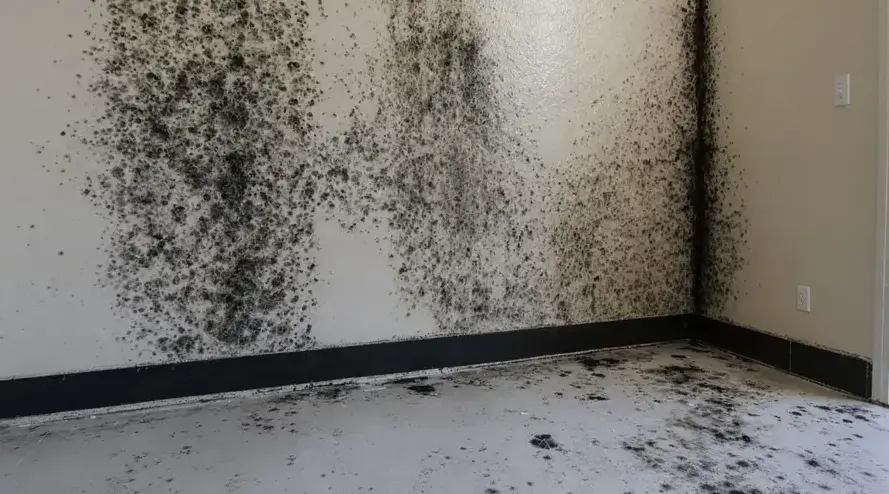
Drywall Mold Removal Services for West Covina Homes
West Covina's inland location in the San Gabriel Valley creates moisture conditions that homeowners often underestimate. Elevated humidity during morning and evening hours—driven by marine-layer moisture and the effects of landscape irrigation common throughout the area—can penetrate drywall and create an environment where mold takes hold. Older post-war homes, particularly those in neighborhoods like South Hills and Cameron Park, are especially vulnerable when crawl spaces beneath the structure allow ground moisture to rise unchecked. Once mold colonizes drywall, it spreads quickly through the material's porous surface, compromising both structural integrity and indoor air quality if left unaddressed.
Chapman Mold Remediation connects West Covina property owners with independent local providers who specialize in thorough drywall mold removal. The process begins with a careful inspection to identify affected areas and moisture sources, followed by safe containment and removal of compromised drywall sections. Providers address the underlying moisture problem to prevent recurrence and restore your home's healthy indoor environment. Whether the issue is localized or more extensive, the goal is complete removal and lasting protection for your property and household.
Why West Covina Property Owners Choose Chapman Mold Remediation
Fast Drywall Mold Removal
Chapman connects you with local providers who respond quickly to drywall mold concerns. Rapid assessment and removal prevent spore spread and protect indoor air quality throughout your home.
Thorough Drywall Mold Treatment
Drywall mold requires careful containment and complete removal to avoid recurrence. Independent providers in our network focus on identifying affected areas and removing damaged sections safely.
Clear Communication Throughout
Drywall mold removal involves specific steps—inspection, containment, removal, and prevention. Local providers connected through Chapman explain each phase clearly so you understand the work and its importance.
Crawl Space Moisture, Drywall Risk
West Covina's older post-war homes often feature vented crawl spaces where ground moisture accumulates, especially during morning and evening humidity peaks. This moisture can wick into drywall and framing above, making professional removal critical.
How Our Drywall Mold Removal Process Works
Schedule Your Drywall Mold Removal Visit
Contact Chapman Mold Remediation to connect with a local West Covina drywall mold removal provider. We'll match you with an independent inspector who will assess which drywall sections are affected and determine the scope of removal needed.
Drywall Inspection & Removal Plan
The provider inspects your drywall for mold colonization, checking both visible surfaces and hidden cavities where moisture from West Covina's elevated morning and evening humidity can accumulate. They'll outline which drywall must be removed, how containment will prevent spore spread, and the removal process.
Safe Drywall Removal & Restoration
The local provider removes contaminated drywall sections under controlled conditions, addresses the moisture source, and installs new drywall once the area is dry and safe. Follow-up may include moisture monitoring to confirm the environment supports no further mold growth.
Dealing with Drywall Mold Removal in West Covina? Get fast, professional help.
Call Now — (626) 889-7446Drywall Mold Removal Across West Covina
West Covina's inland location in the San Gabriel Valley creates moisture conditions that can promote mold growth on drywall, particularly during morning and evening hours when humidity rises. The combination of the region's mild climate and persistent landscape irrigation—common throughout residential and commercial properties—means that drywall surfaces in older post-war homes are especially vulnerable if crawl spaces beneath the structure allow ground moisture to migrate upward. This foundational moisture, when it reaches wall cavities and drywall, creates an environment where mold can develop slowly and often unnoticed until visible discoloration or soft spots appear on interior surfaces.
Drywall mold removal in West Covina typically requires assessment of how moisture is entering the wall assembly and whether affected sections can be dried and treated or must be replaced. Neighborhoods like South Hills and Cameron Park, which include both established homes and properties undergoing renovation, frequently face this issue. The independent local providers Chapman Mold Remediation connects customers to understand the relationship between crawl-space moisture control and indoor drywall integrity, ensuring that removal addresses not just the visible mold but the moisture pathway that allowed it to form.
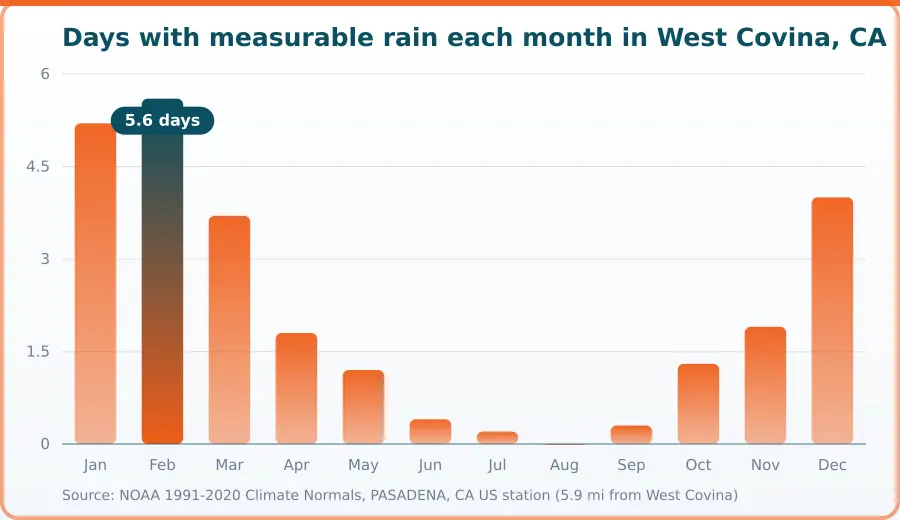
| Period | Days with measurable rain by month (days) |
|---|---|
| Jan | 5.2 |
| Feb | 5.6 |
| Mar | 3.7 |
| Apr | 1.8 |
| May | 1.2 |
| Jun | 0.4 |
| Jul | 0.2 |
| Aug | 0 |
| Sep | 0.3 |
| Oct | 1.3 |
| Nov | 1.9 |
| Dec | 4 |
Source: NOAA 1991-2020 Climate Normals, PASADENA, CA US station (5.9 mi from West Covina). Retrieved October 27, 2026.
Seasonal Drywall Mold Removal Needs in West Covina
Spring: Morning Moisture Rise
Spring's cooler mornings and landscape irrigation boost humidity levels, creating ideal conditions for drywall mold colonization. Chapman Mold Remediation connects West Covina property owners with local providers who inspect drywall for early-stage growth and contain it before warm weather accelerates spread.
Summer: Heat and Accelerated Growth
Summer temperatures increase drywall mold metabolism and reproduction rates, especially in areas with prior water exposure or high indoor humidity. Connected providers use targeted removal and ventilation strategies to eliminate active mold before it compromises structural integrity and indoor air quality.
Fall: Crawl-Space Moisture Trap
Fall's reduced evaporation allows ground moisture from vented crawl spaces common in West Covina's older post-war homes to rise into framing and drywall above. Chapman Mold Remediation links homeowners with local specialists who address moisture sources and remove affected drywall before winter moisture locks in permanently.
Winter: Condensation and Cold Gaps
Winter temperature swings cause condensation on cool drywall surfaces, while gaps in insulation create cold spots where moisture accumulates. Connected providers inspect vulnerable walls and implement removal and drying strategies to prevent mold from taking hold during the season's moisture-prone months.
Related Services
Drywall Mold Removal FAQs — West Covina, CA
Drywall mold removal begins with identifying affected areas, often found in walls where moisture has accumulated. The independent provider will assess whether sections can be cleaned and treated or if damaged drywall must be removed and replaced. The process includes moisture source control, safe containment to prevent spore dispersal, removal of compromised material, and thorough drying before reinstallation. Your provider will explain the scope and next steps based on what they find.
Chapman Mold Remediation works to connect you with local, independent drywall mold removal providers in West Covina as quickly as possible. Response times depend on provider availability and your property's access. Once connected, your provider can often schedule an inspection within days. The sooner you address drywall mold, the easier containment and removal typically become, so contacting Chapman promptly helps protect your home's indoor air quality.
Drywall mold removal pricing depends on several factors: the size and location of affected areas, how deep mold has penetrated the drywall, whether structural framing is involved, and the moisture source that allowed mold to develop. The provider will assess your specific situation during an inspection and discuss pricing with you directly. Addressing the underlying moisture issue is also part of a complete removal job and may influence the overall scope.
Before your provider arrives, clear the affected area of personal items and furniture when possible to give them workspace and access. Identify and note any signs of moisture or water damage you've observed. If you know the source of moisture—plumbing leak, roof damage, or high humidity—share that information. Your provider may ask you to leave the property during removal to avoid exposure to dust and spores. They'll guide you on specific preparation steps based on your home's layout and the affected drywall location.
The key to preventing drywall mold recurrence is controlling moisture. Fix any active leaks, ensure gutters and downspouts direct water away from the foundation, and maintain proper ventilation in bathrooms and kitchens. In West Covina's semi-arid climate, morning and evening humidity can still accumulate indoors, especially in homes with vented crawl spaces where ground moisture rises. Use exhaust fans, keep indoor humidity moderate, and monitor previously affected areas for any sign of moisture return. Your provider can offer specific moisture-control recommendations for your home.
While West Covina's mild climate means mold can develop year-round, moisture risks peak during cooler mornings and evenings when indoor humidity rises and condensation forms on surfaces. Homes with vented crawl spaces are particularly vulnerable to ground moisture migration during these periods. If you notice drywall mold growth, addressing it promptly—regardless of season—prevents it from deepening into framing and spreading. Spring and fall often bring humidity fluctuations that can worsen existing moisture problems if left unchecked.
Homeowner Safety Toolkit
Verify Your West Covina, CA Mold Remediation Company
Before you hire anyone, use these independent national resources to confirm credentials, standards, and track record.
BBB
Look up any mold remediation company's complaint history, customer reviews, and accreditation status — a free, independent check before you hire.
Check StandingCDC
Covers the health effects of mold exposure and safe cleanup practices, separate from the remediation work itself — useful if anyone in the home has respiratory symptoms.
Mold Health GuideIICRC
Publishes the S520 standard for professional mold remediation. Confirm a company's technicians hold real, current IICRC certification before you hire them.
Verify CertificationDealing with Drywall Mold Removal in West Covina, CA? Call (626) 889-7446 for 24/7 help.
Call Now — (626) 889-7446Areas We Serve in West Covina, California
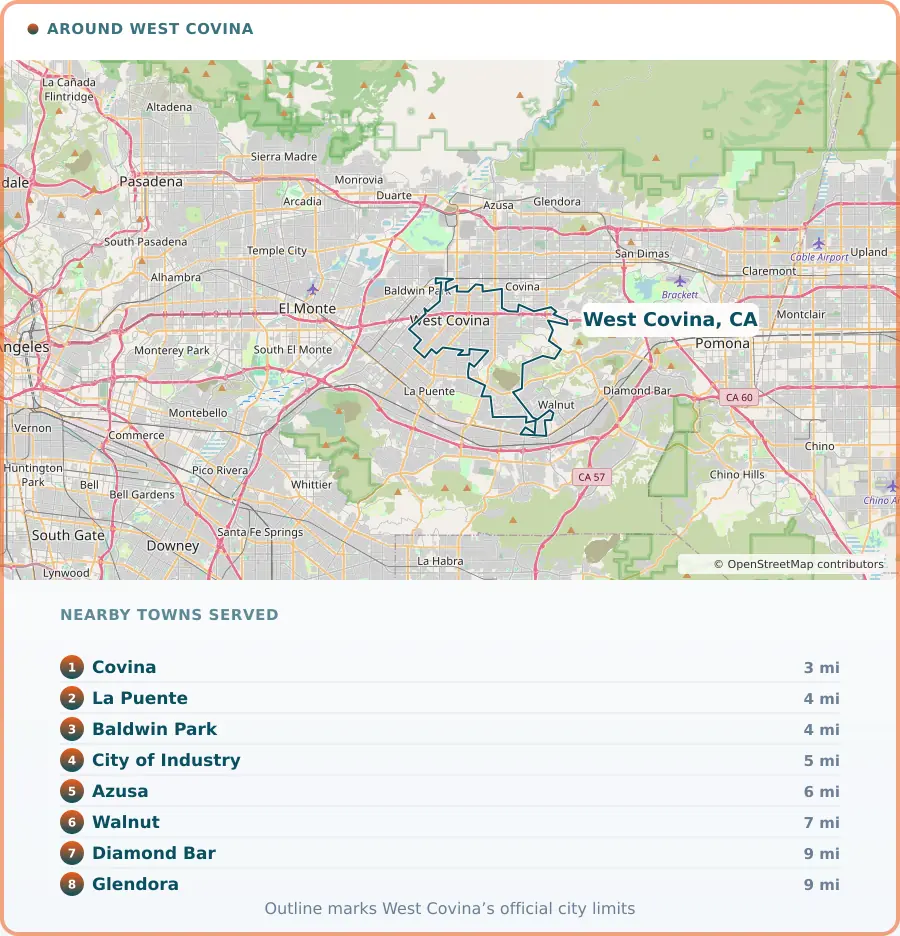
West Covina, CA is the centre of the service area, which extends to 8 surrounding towns. The map shows how far that reaches.
West Covina, CA Information
Tucked into the San Gabriel Valley east of Los Angeles, West Covina, CA is home to roughly 115,900 residents who enjoy a blend of suburban neighborhoods and bustling commerce. Hillside pockets like South Hills and Shadow Oak give the city a quieter, residential character, while major corridors nearby keep daily life connected to the wider valley.
Shopping fuels much of the local economy, with Westfield West Covina and Eastland Center drawing steady traffic alongside retailers such as Walmart, Costco, Target, and The Home Depot. Healthcare is another pillar, anchored by Emanate Health Queen of the Valley Hospital and Kaiser Permanente, while automotive dealerships, logistics operations, and public employers like the city government and West Covina Unified School District round out a diverse, hardworking community.

Photo: ASDFGH, CC BY-SA 4.0