

Ceiling Mold Removal in West Covina, CA
West Covina's older homes, particularly those with vented crawl spaces common in post-war construction, face moisture challenges from morning and evening humidity and heavy landscape irrigation that can promote mold growth in overhead areas. Ceiling mold in these conditions often develops silently until visible damage or discoloration appears, potentially affecting the structural integrity of framing and joists. Chapman Mold Remediation connects West Covina property owners with local removal providers who can safely contain and eliminate ceiling mold, helping restore indoor air quality and protect your home's long-term condition.
What gets cleaned on a ceiling, and what comes out
The honest answer to “does this come out, or can it be cleaned?” turns on two things — what the material is, and how many square feet are affected. Those are the two axes of the EPA’s own remediation table, reproduced below for the materials usually found on a ceiling.
| Material | Under 10 sq ftabout a cabinet door, or one ceiling tile | 10 to 100 sq ftroughly one wall, or a small bathroom | Over 100 sq ftmore than one room's worth of surface |
|---|---|---|---|
| Wallboardthe ceiling drywall itselfEPA, Table 2 | HEPA vacuum | HEPA vacuumRemove and discard | HEPA vacuumRemove and discard |
| Wood surfacesjoists and framing in the cavity aboveEPA, Table 2 | Wet vacuumDamp wipeHEPA vacuum | Wet vacuumDamp wipeHEPA vacuum | Wet vacuumDamp wipeHEPA vacuumRemove and discard |
What those methods mean, in EPA's words
- Wet vacuum
Wet vacuums are vacuum cleaners designed to collect water. They can be used to remove water from floors, carpets and hard surfaces where water has accumulated.
EPA, cleanup methods- Damp wipe
Mold can generally be removed from nonporous (hard) surfaces by wiping or scrubbing with water, or water and detergent.
EPA, cleanup methods- HEPA vacuum
HEPA (High-Efficiency Particulate Air) vacuums are recommended for final cleanup of remediation areas after materials have been thoroughly dried and contaminated materials removed.
EPA, cleanup methods- Remove and discard
Building materials and furnishings that are contaminated with mold growth and are not salvageable should be double-bagged using 6-mil polyethylene sheeting.
EPA, cleanup methods
Removed and replaced, whatever the area
- Ceiling tiles — drop-ceiling or acoustic tiles.
Discard and replace.
EPA, Table 1This is the action EPA's water-damage table gives for ceiling tiles. It is the one material here with no size threshold to weigh. - Fiberglass or other insulation — any insulation sitting on top of the ceiling.
Fiber glass, or any other insulation material that is wet or visibly moldy (or if an unacceptable odor is present) should be removed and replaced by a qualified heating and cooling system contractor.
EPA, air duct cleaningEPA states this in its heating-and-cooling guidance and it is quoted here as written. Its water-damage table reaches the same conclusion for both fiberglass and cellulose insulation.
These guidelines are for damage caused by clean water. If you know or suspect that the water source is contaminated with sewage, or chemical or biological pollutants, then Personal Protective Equipment and containment are required by OSHA.
EPA, Table 1Porous materials that are wet and have mold growing on them may have to be discarded.
EPA, cleanup methodsMold can grow on wood, drywall, carpet and furniture if they remain wet for more than 24 hours.
EPA, flood cleanup
Ceiling mold nearly always means water arriving from above — a roof, a supply or waste line, or a bathroom on the floor above. The ceiling is the symptom, so cleaning it without finding the source buys a few months at most. Drop-ceiling tile is the one material here with no decision to make: EPA's water-damage table lists it as discard and replace.
Days of an inch or more reach West Covina roughly 6.6 times a year, peaking in February.Source: NOAA 1991-2020 Climate Normals, PASADENA, CA US station (5.9 mi from West Covina)
Ceiling Mold Removal Demand in West Covina
West Covina property owners face persistent moisture challenges that create ideal conditions for mold growth on ceilings and overhead surfaces. The San Gabriel Valley's mild climate combines with morning and evening humidity patterns driven by inland marine-layer moisture and landscape irrigation practices, keeping indoor air damp even during dry seasons. Older post-war homes throughout West Covina—particularly those with vented crawl spaces beneath them—are especially vulnerable, since ground moisture rising through these spaces can saturate wall cavities and affect upper-level framing and drywall. When moisture accumulates in attic spaces or behind ceiling materials, mold colonies take hold quietly, often remaining hidden until visible discoloration or soft spots appear. Addressing ceiling mold promptly protects both the structural integrity of your home and the indoor air quality your family depends on.
Chapman Mold Remediation connects West Covina property owners with independent local mold removal providers who focus on thorough ceiling mold identification, safe containment, and complete remediation. Rather than offering a quick surface fix, these professionals assess the full scope of the problem—tracing moisture sources, evaluating affected materials, and removing compromised drywall, insulation, or framing as needed. They work to restore healthy indoor conditions and help prevent mold from recurring in the same areas. If you've spotted discoloration overhead or suspect hidden ceiling mold, reaching out to a local provider through Chapman Mold Remediation starts the process toward a drier, healthier home.
Why West Covina Property Owners Choose Chapman Mold Remediation
Fast Ceiling Mold Removal
Chapman connects you with local providers who respond quickly to ceiling mold concerns. Prompt assessment and removal prevent moisture from spreading further into your home's structure and indoor air.
Thorough Ceiling Mold Treatment
Independent providers in the Chapman network handle ceiling mold removal with careful containment and complete remediation. Addressing the source of moisture ensures mold doesn't return to the same area.
Clear Communication Throughout
Chapman's local providers explain ceiling mold findings and removal steps in plain language. You'll understand what's happening, why treatment is needed, and how to protect your indoor air quality.
Moisture Control for Older Homes
Many West Covina properties built in the post-war era experience elevated humidity from ground moisture and morning/evening dampness. Addressing ceiling mold requires providers who understand how trapped ground-level moisture rises and affects upper structures.
How The Ceiling Mold Removal Process Works
Connect with a Local Ceiling Mold Inspector
Tell us about the ceiling mold you've noticed, and we'll connect you with an independent mold inspection provider serving West Covina. They'll schedule a visit to examine the affected ceiling area and identify the source of moisture driving the growth.
Receive a Detailed Ceiling Mold Assessment
Your inspector will evaluate the extent of ceiling mold, check for hidden moisture in overhead cavities, and determine whether the cause is roof leaks, plumbing, or elevated indoor humidity—common in West Covina homes where morning and evening moisture can accumulate without proper ventilation.
Begin Ceiling Mold Removal and Prevention
The provider will outline a removal plan tailored to your ceiling's condition and will discuss moisture control steps to help prevent ceiling mold from returning. You'll receive clear guidance on what to expect during the removal process and any follow-up inspections.
Dealing with Ceiling Mold Removal in West Covina? Get fast, professional help.
Call Now — (626) 889-7446Ceiling Mold Removal Across West Covina
West Covina's inland location in the San Gabriel Valley creates humidity challenges that many property owners underestimate. Morning and evening moisture from the marine layer, combined with the landscape irrigation that keeps the area's mature trees and gardens thriving, can elevate indoor humidity levels even during dry months. This persistent moisture—especially in older homes—creates ideal conditions for mold growth on ceilings, where condensation and poor ventilation often concentrate the problem.
Homes built in the post-war era across West Covina frequently feature vented crawl spaces designed to allow airflow beneath the structure. When these spaces are not properly maintained, ground moisture can rise into the home's lower cavities and eventually reach ceiling areas above, particularly in bathrooms and kitchens where warm air meets cooler surfaces. Addressing ceiling mold in these homes requires understanding how moisture travels through the building envelope. Chapman Mold Remediation connects you with local providers who understand West Covina's specific moisture patterns and can recommend removal and prevention strategies tailored to your property's age, ventilation, and local climate exposure.
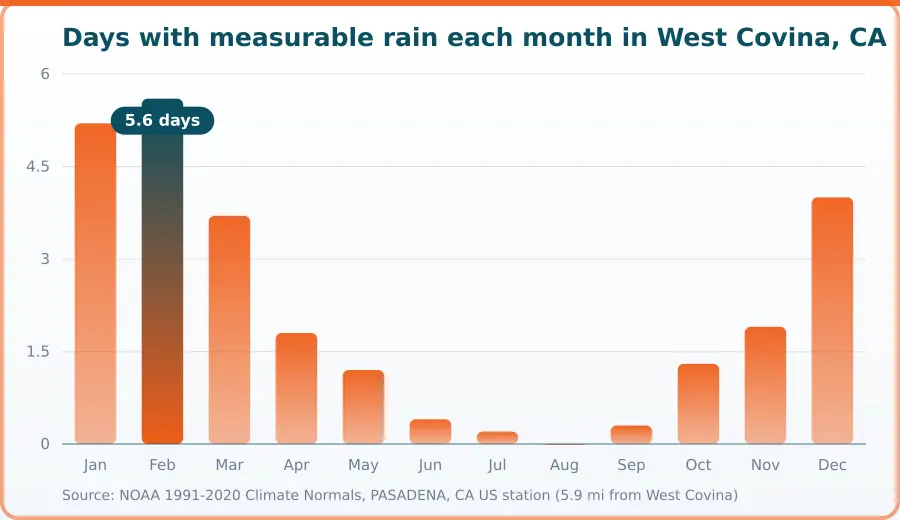
| Period | Days with measurable rain by month (days) |
|---|---|
| Jan | 5.2 |
| Feb | 5.6 |
| Mar | 3.7 |
| Apr | 1.8 |
| May | 1.2 |
| Jun | 0.4 |
| Jul | 0.2 |
| Aug | 0 |
| Sep | 0.3 |
| Oct | 1.3 |
| Nov | 1.9 |
| Dec | 4 |
Source: NOAA 1991-2020 Climate Normals, PASADENA, CA US station (5.9 mi from West Covina). Retrieved October 27, 2026.
Seasonal Ceiling Mold Removal Challenges in West Covina
Spring: Morning Humidity Peaks
Spring mornings in West Covina bring elevated humidity from inland marine-layer moisture, creating ideal conditions for ceiling mold growth in older post-war homes. Chapman Mold Remediation connects property owners with local providers who identify and remove mold before it spreads deeper into framing and insulation.
Summer: Heat and Condensation
Summer heat intensifies temperature swings between air-conditioned interiors and warm attics, causing condensation that fuels ceiling mold development. Local providers help homeowners address moisture-laden ceilings before mold compromises indoor air quality and structural integrity.
Fall: Seasonal Moisture Trapping
Fall evenings cool rapidly while humidity remains elevated, causing moisture to settle on ceilings and in upper-story spaces. Chapman Mold Remediation links property owners with independent inspectors and remediators who prevent early-season ceiling mold from establishing before winter arrives.
Winter: Reduced Ventilation Risk
Winter typically brings the season's lowest humidity, but reduced natural ventilation in closed homes can still trap moisture around ceiling penetrations, vents, and light fixtures. Local providers work to remove any existing ceiling mold and restore proper attic airflow to keep indoor environments healthy through spring.
Related Services
Ceiling Mold Removal FAQs — West Covina, CA
Ceiling mold removal typically begins with assessment of the affected area to determine moisture source and mold extent. The local provider will contain the work area, remove contaminated materials, address underlying moisture or humidity issues, clean and treat surfaces, and restore the ceiling. The goal is complete removal while preventing spores from spreading through your home.
Chapman Mold Remediation works to connect you with local independent providers quickly so you can address ceiling mold without delay. Response times depend on provider availability in West Covina, but our referral network is designed to get qualified help to you as soon as possible once you submit your request.
Pricing for ceiling mold removal depends on the size of the affected area, how deep mold has penetrated, whether structural materials need replacement, and what caused the moisture problem. The independent provider will assess these factors during inspection and provide cost details. Addressing the moisture source itself often impacts overall project scope and pricing.
Clear the work area of personal items and furniture to give the provider safe access to the ceiling. Discuss containment procedures beforehand—the provider will typically seal off the work zone to contain dust and spores. Plan for temporary disruption to utilities or HVAC if the mold-affected area requires isolation during removal and cleanup.
After removal, control moisture by fixing roof or plumbing leaks, ensuring proper attic ventilation, and monitoring humidity levels. In West Covina's climate, morning and evening moisture can accumulate indoors—using exhaust fans in bathrooms and kitchens, and maintaining good air circulation, helps prevent recurrence. Ask the provider about moisture control recommendations specific to your home.
West Covina's inland location means morning and evening moisture from marine-layer air can linger indoors, especially when combined with landscape irrigation and cooler temperatures. These conditions create ideal humidity for mold growth on ceilings year-round. Older post-war homes with vented crawl spaces are particularly vulnerable if ground moisture seeps upward, elevating indoor humidity and promoting ceiling mold.
Homeowner Safety Toolkit
Verify Your West Covina, CA Mold Remediation Company
Before you hire anyone, use these independent national resources to confirm credentials, standards, and track record.
BBB
Look up any mold remediation company's complaint history, customer reviews, and accreditation status — a free, independent check before you hire.
Check StandingCDC
Covers the health effects of mold exposure and safe cleanup practices, separate from the remediation work itself — useful if anyone in the home has respiratory symptoms.
Mold Health GuideIICRC
Publishes the S520 standard for professional mold remediation. Confirm a company's technicians hold real, current IICRC certification before you hire them.
Verify CertificationDealing with Ceiling Mold Removal in West Covina, CA? Call (626) 889-7446 for 24/7 help.
Call Now — (626) 889-7446Areas We Serve in West Covina, California
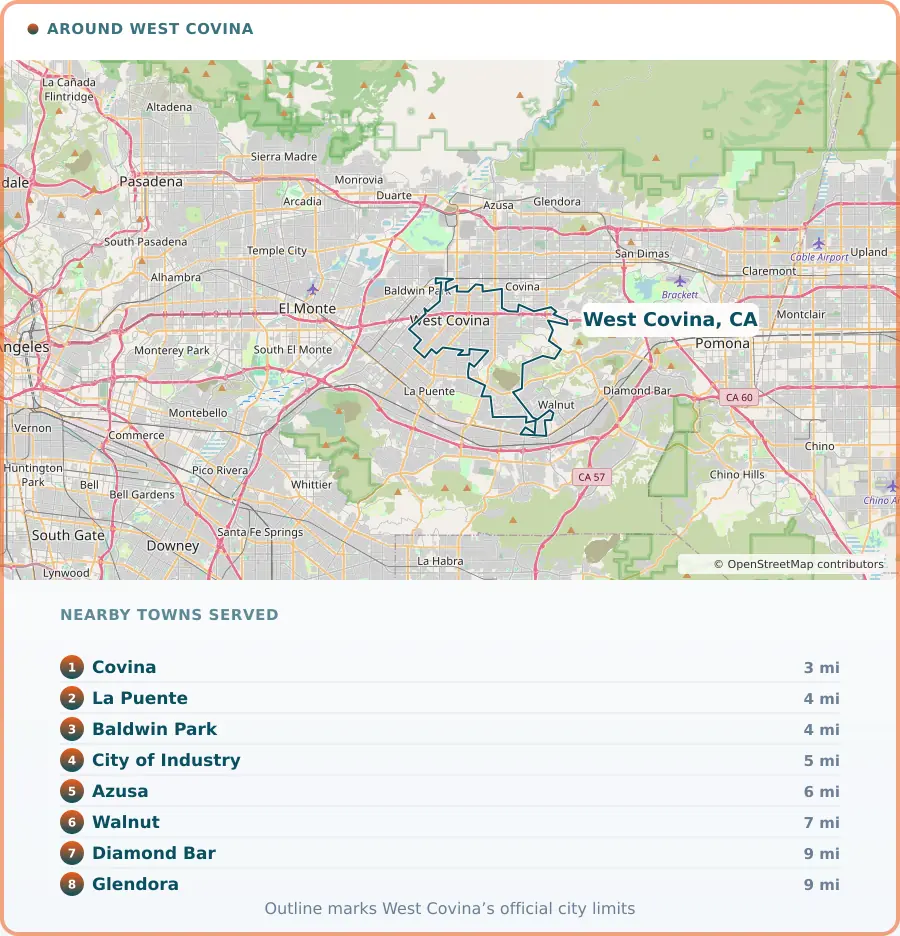
West Covina, CA is the centre of the service area, which extends to 8 surrounding towns. The map shows how far that reaches.
West Covina, CA Information
Tucked into the San Gabriel Valley east of Los Angeles, West Covina, CA is home to roughly 115,900 residents who enjoy a blend of suburban neighborhoods and bustling commerce. Hillside pockets like South Hills and Shadow Oak give the city a quieter, residential character, while major corridors nearby keep daily life connected to the wider valley.
Shopping fuels much of the local economy, with Westfield West Covina and Eastland Center drawing steady traffic alongside retailers such as Walmart, Costco, Target, and The Home Depot. Healthcare is another pillar, anchored by Emanate Health Queen of the Valley Hospital and Kaiser Permanente, while automotive dealerships, logistics operations, and public employers like the city government and West Covina Unified School District round out a diverse, hardworking community.

Photo: ASDFGH, CC BY-SA 4.0