

Crawl Space Mold Removal in West Covina, CA
West Covina's older post-war homes often feature vented crawl spaces that accumulate ground moisture, especially when morning and evening humidity levels stay elevated from inland marine-layer air and landscape irrigation. These conditions create an environment where mold can take hold beneath the home if the crawl space isn't properly maintained and ventilated. Chapman Mold Remediation connects West Covina property owners with local crawl space mold removal providers who can assess moisture intrusion, remove affected materials safely, and help restore a healthier environment under your home.
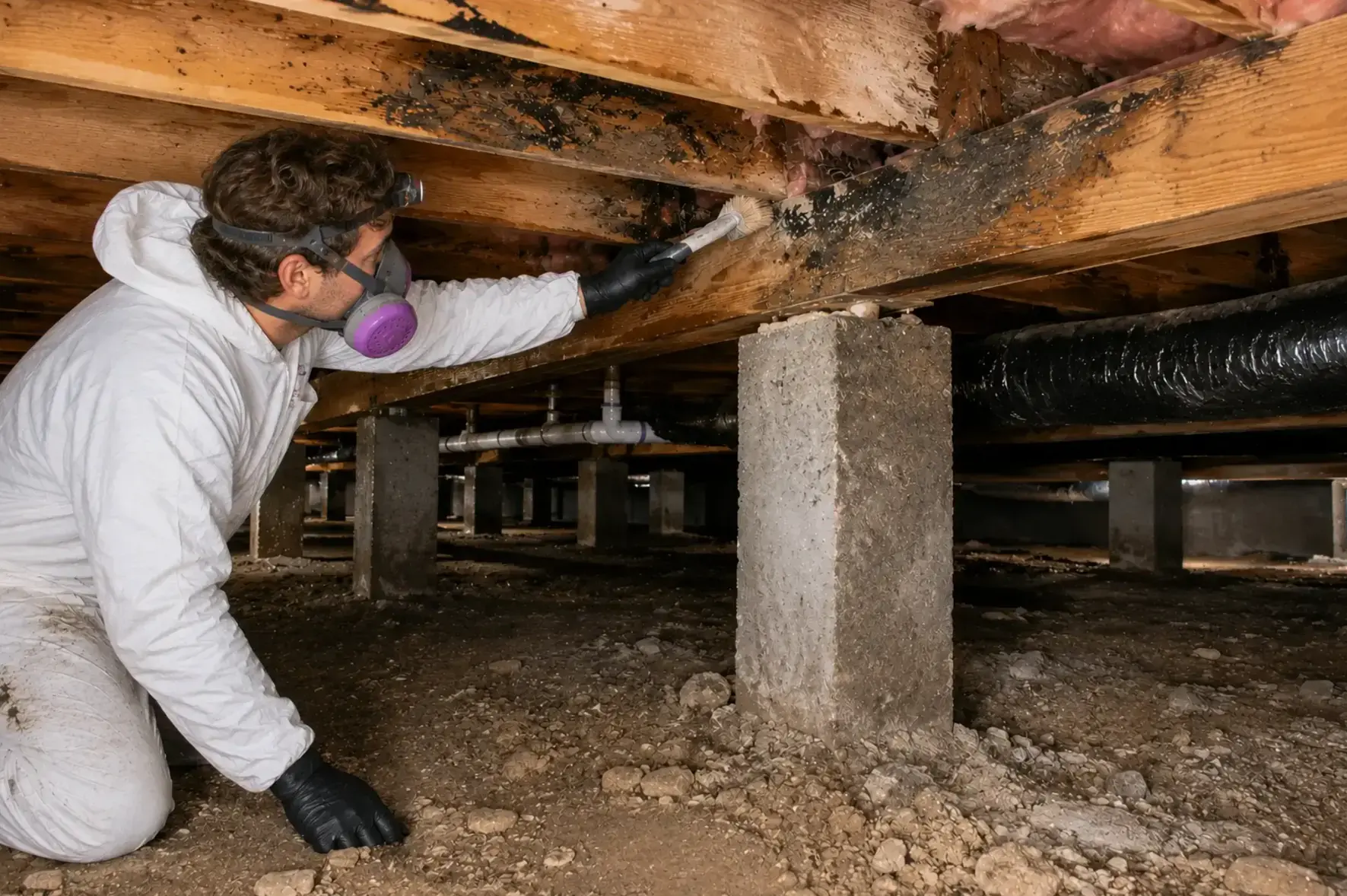
What gets cleaned in a crawl space, and what comes out
The honest answer to “does this come out, or can it be cleaned?” turns on two things — what the material is, and how many square feet are affected. Those are the two axes of the EPA’s own remediation table, reproduced below for the materials usually found in a crawl space.
| Material | Under 10 sq ftabout a cabinet door, or one ceiling tile | 10 to 100 sq ftroughly one wall, or a small bathroom | Over 100 sq ftmore than one room's worth of surface |
|---|---|---|---|
| Wood surfacesfloor joists, subfloor, beams and piersEPA, Table 2 | Wet vacuumDamp wipeHEPA vacuum | Wet vacuumDamp wipeHEPA vacuum | Wet vacuumDamp wipeHEPA vacuumRemove and discard |
| Concrete or cinder blockblock piers, stem walls and any slabEPA, Table 2 | Wet vacuumHEPA vacuum | Wet vacuumHEPA vacuum | Wet vacuumHEPA vacuum |
What those methods mean, in EPA's words
- Wet vacuum
Wet vacuums are vacuum cleaners designed to collect water. They can be used to remove water from floors, carpets and hard surfaces where water has accumulated.
EPA, cleanup methods- Damp wipe
Mold can generally be removed from nonporous (hard) surfaces by wiping or scrubbing with water, or water and detergent.
EPA, cleanup methods- HEPA vacuum
HEPA (High-Efficiency Particulate Air) vacuums are recommended for final cleanup of remediation areas after materials have been thoroughly dried and contaminated materials removed.
EPA, cleanup methods- Remove and discard
Building materials and furnishings that are contaminated with mold growth and are not salvageable should be double-bagged using 6-mil polyethylene sheeting.
EPA, cleanup methods
Removed and replaced, whatever the area
- Fiberglass or other insulation — batt insulation between the joists.
Fiber glass, or any other insulation material that is wet or visibly moldy (or if an unacceptable odor is present) should be removed and replaced by a qualified heating and cooling system contractor.
EPA, air duct cleaningEPA states this in its heating-and-cooling guidance and it is quoted here as written. Its water-damage table reaches the same conclusion for both fiberglass and cellulose insulation.
These guidelines are for damage caused by clean water. If you know or suspect that the water source is contaminated with sewage, or chemical or biological pollutants, then Personal Protective Equipment and containment are required by OSHA.
EPA, Table 1Porous materials that are wet and have mold growing on them may have to be discarded.
EPA, cleanup methodsMold can grow on wood, drywall, carpet and furniture if they remain wet for more than 24 hours.
EPA, flood cleanup
A missing or torn vapor barrier lets ground moisture into the framing continuously, so the lasting fix is the barrier and the drainage rather than the cleaning. Joists and subfloor are wood and are usually salvageable even at large areas. The batt insulation between them is not — and pulling it is often how the real extent of the problem first becomes visible.
This is not rare locally: Los Angeles County has recorded flood events in 25 separate years, most often in the 2020s, and most recently in 2026. Water that sat years ago leaves growth behind whether anyone found it or not.Source: NOAA Storm Events Database, Los Angeles County (1996-2026; Flood, Flash Flood and Coastal Flood events)
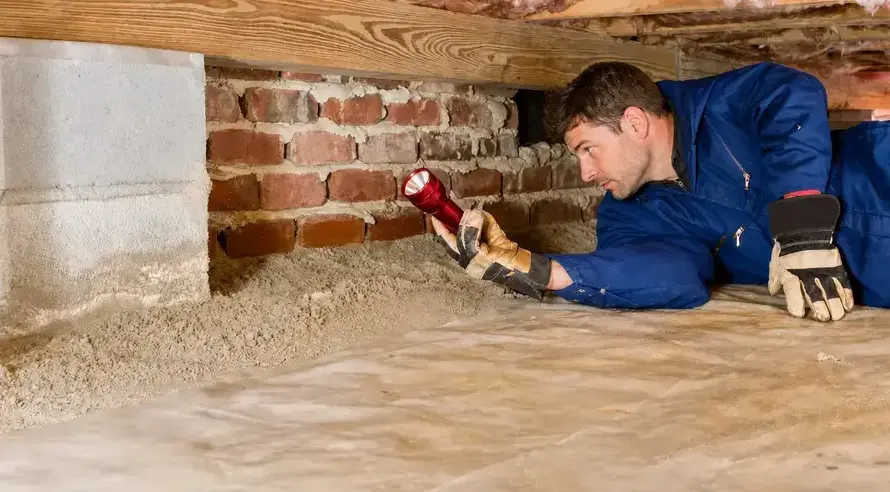
Crawl Space Mold Removal Services for West Covina Homes
Many West Covina property owners discover mold problems in their crawl spaces during routine maintenance or after noticing musty odors in their homes. The San Gabriel Valley's combination of morning and evening moisture from marine-layer influence and the widespread use of landscape irrigation can leave crawl spaces damp, especially in older post-war homes with vented foundations. When ground moisture accumulates beneath a home, mold can develop on wood framing, insulation, and soil surfaces—creating indoor air quality concerns and potential structural issues if left unaddressed. Property owners in neighborhoods like South Hills, Shadow Oak, and Cameron Park face this particular challenge because of how local soil moisture and ventilation patterns interact in these vented crawl space designs.
Chapman Mold Remediation connects West Covina property owners with independent local providers who understand crawl space mold removal as a specialized process. These providers assess moisture sources, containment needs, and removal scope—then execute thorough remediation work designed to eliminate affected material and restore safe air quality beneath the home. Follow-up moisture management and ventilation guidance help reduce the risk of recurrence. If you've noticed signs of mold in your crawl space or want to address humidity concerns before they develop into a larger problem, Chapman Mold Remediation can connect you with local professionals ready to evaluate your situation and discuss your options.
Why West Covina Property Owners Choose Chapman Mold Remediation
Local Crawl Space Mold Expertise
Chapman connects you with independent providers experienced in crawl space mold removal specific to West Covina homes. They understand moisture patterns beneath older post-war properties and deliver targeted solutions.
Fast Response to Mold Growth
When mold appears in your crawl space, prompt action prevents further spread. Chapman links you directly with responsive local providers ready to assess and address crawl space mold removal quickly.
Thorough Crawl Space Mold Removal
Complete crawl space mold removal requires identifying moisture sources, containing affected areas safely, and removing growth systematically. Chapman's network providers handle each step with clear communication throughout the process.
San Gabriel Valley Moisture Challenges
Morning and evening humidity in the San Gabriel Valley can elevate moisture levels in crawl spaces, creating conditions where mold takes hold. West Covina's vented crawl spaces need vigilant maintenance to prevent growth from developing below your home.
How Our Crawl Space Mold Removal Process Works
Schedule Your Crawl Space Mold Removal Visit
Contact Chapman Mold Remediation to request an inspection appointment in West Covina. We'll connect you with a local crawl space mold removal provider who can assess your property and discuss your concerns.
Inspect and Diagnose Crawl Space Mold
The provider performs a thorough crawl space inspection to identify mold growth, moisture sources, and ventilation issues. In West Covina's older homes, vented crawl spaces often retain ground moisture that supports mold development—the inspection determines the extent and scope of crawl space mold removal needed.
Remove Mold and Restore Crawl Space Health
The provider removes mold-affected materials, treats affected surfaces, and addresses moisture sources in your crawl space. Follow-up guidance on ventilation, drainage, or humidity monitoring helps protect your crawl space from future mold growth.
Dealing with Crawl Space Mold Removal in West Covina? Get fast, professional help.
Call Now — (626) 889-7446Crawl Space Mold Removal Across West Covina
West Covina's mix of post-war homes and established neighborhoods creates varying conditions for crawl space moisture management. Many of the city's older properties feature vented crawl spaces—common construction from that era—where ground moisture and humidity can accumulate, especially during morning and evening hours when inland marine-layer moisture elevates dampness levels. Routine landscape irrigation, typical throughout residential West Covina, can also contribute to elevated soil and foundation moisture if drainage isn't functioning well, making crawl spaces particularly vulnerable to conditions that support mold growth.
Crawl space mold removal in West Covina requires attention to these moisture patterns and the specific design of older vented foundations. Local property owners dealing with musty odors, visible mold, or signs of moisture in crawl spaces benefit from prompt inspection and remediation to protect indoor air quality and prevent structural issues. Chapman Mold Remediation connects West Covina property owners with independent local mold remediation providers who understand the region's moisture challenges and can assess crawl space conditions thoroughly.
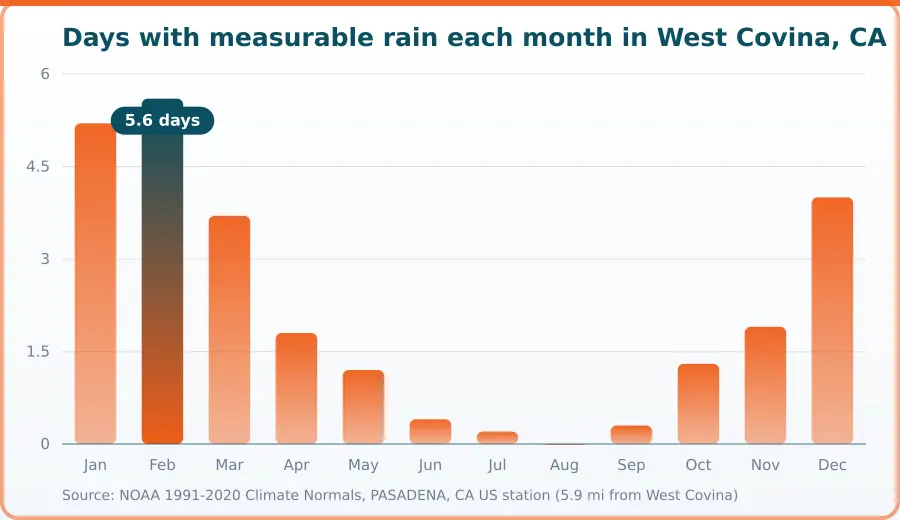
| Period | Days with measurable rain by month (days) |
|---|---|
| Jan | 5.2 |
| Feb | 5.6 |
| Mar | 3.7 |
| Apr | 1.8 |
| May | 1.2 |
| Jun | 0.4 |
| Jul | 0.2 |
| Aug | 0 |
| Sep | 0.3 |
| Oct | 1.3 |
| Nov | 1.9 |
| Dec | 4 |
Source: NOAA 1991-2020 Climate Normals, PASADENA, CA US station (5.9 mi from West Covina). Retrieved October 27, 2026.
Crawl Space Mold Removal Through West Covina's Seasons
Spring: Moisture Awakening
Spring rains and warming temperatures increase ground moisture beneath homes, activating dormant mold spores in crawl spaces. Morning and evening humidity lingers in these vented foundations, creating ideal conditions for mold colonization. Chapman Mold Remediation connects you with local removal providers who assess moisture levels and containment needs early.
Summer: Heat and Humidity Pressure
Summer heat drives moisture upward through soil into crawl spaces, while landscape irrigation adds persistent ground dampness. Mold growth accelerates in warm, humid conditions even as outdoor air dries. Local providers accessed through Chapman address active infestations and inspect ventilation before mold spreads to living areas above.
Fall: Settling and Decay
As temperatures cool and organic debris accumulates in crawl spaces—leaves, wood, insulation fragments—mold feeds on decomposing material and trapped moisture. Fall rains recharge groundwater around foundations. Chapman Mold Remediation connects you with providers who remove affected materials and restore air quality before winter seals homes tight.
Winter: Condensation Concentration
West Covina's older post-war homes with vented crawl spaces face winter condensation as warm interior air meets cold ground surfaces and exterior vents, concentrating moisture where mold thrives. Seasonal heating intensifies this cycle. Chapman links property owners to local providers for thorough inspection, removal, and moisture-control solutions tailored to crawl space vulnerabilities.
Related Services
Crawl Space Mold Removal FAQs — West Covina, CA
Crawl space mold removal typically includes inspection to identify affected areas, containment to prevent spore spread, removal of contaminated materials, and thorough cleaning of surfaces. The independent local providers Chapman connects to will assess moisture sources, dry the space, and address conditions that allowed mold to develop. The specific scope depends on the extent of mold and structural damage found.
Chapman works to connect you with local crawl space mold removal providers in West Covina promptly so you can get an inspection and removal plan underway. Response times depend on provider availability and your property's details. Contact Chapman as soon as you suspect crawl space mold to begin the process without delay.
Crawl space mold removal costs vary based on the affected area's size, mold extent, accessibility, moisture source complexity, and whether structural repairs are needed. Each independent provider sets their own pricing. Chapman connects you with local providers who can assess your crawl space and provide cost details specific to your situation.
Before removal begins, document the affected area if safe to do so, remove personal items stored in the crawl space, and ensure the provider has clear access. The independent provider you work with will give specific preparation instructions. Expect containment setup to isolate the work area and protect your home's interior air quality during the removal process.
After removal, maintain proper crawl space ventilation, control ground moisture through drainage or vapor barriers, and monitor humidity levels. Regular inspections help catch early signs of moisture buildup. Keep gutters clear and landscape irrigation managed so water doesn't pool near your foundation. The independent provider can recommend ongoing maintenance strategies for your specific crawl space.
Many West Covina properties, particularly older post-war homes, have vented crawl spaces that can trap ground moisture, especially during morning and evening hours when humidity rises. Landscape irrigation and inland moisture patterns in the San Gabriel Valley region create conditions where mold thrives if crawl spaces aren't properly maintained. Good drainage and ventilation are essential in this area.
Homeowner Safety Toolkit
Verify Your West Covina, CA Mold Remediation Company
Before you hire anyone, use these independent national resources to confirm credentials, standards, and track record.
BBB
Look up any mold remediation company's complaint history, customer reviews, and accreditation status — a free, independent check before you hire.
Check StandingCDC
Covers the health effects of mold exposure and safe cleanup practices, separate from the remediation work itself — useful if anyone in the home has respiratory symptoms.
Mold Health GuideIICRC
Publishes the S520 standard for professional mold remediation. Confirm a company's technicians hold real, current IICRC certification before you hire them.
Verify CertificationDealing with Crawl Space Mold Removal in West Covina, CA? Call (626) 889-7446 for 24/7 help.
Call Now — (626) 889-7446Areas We Serve in West Covina, California
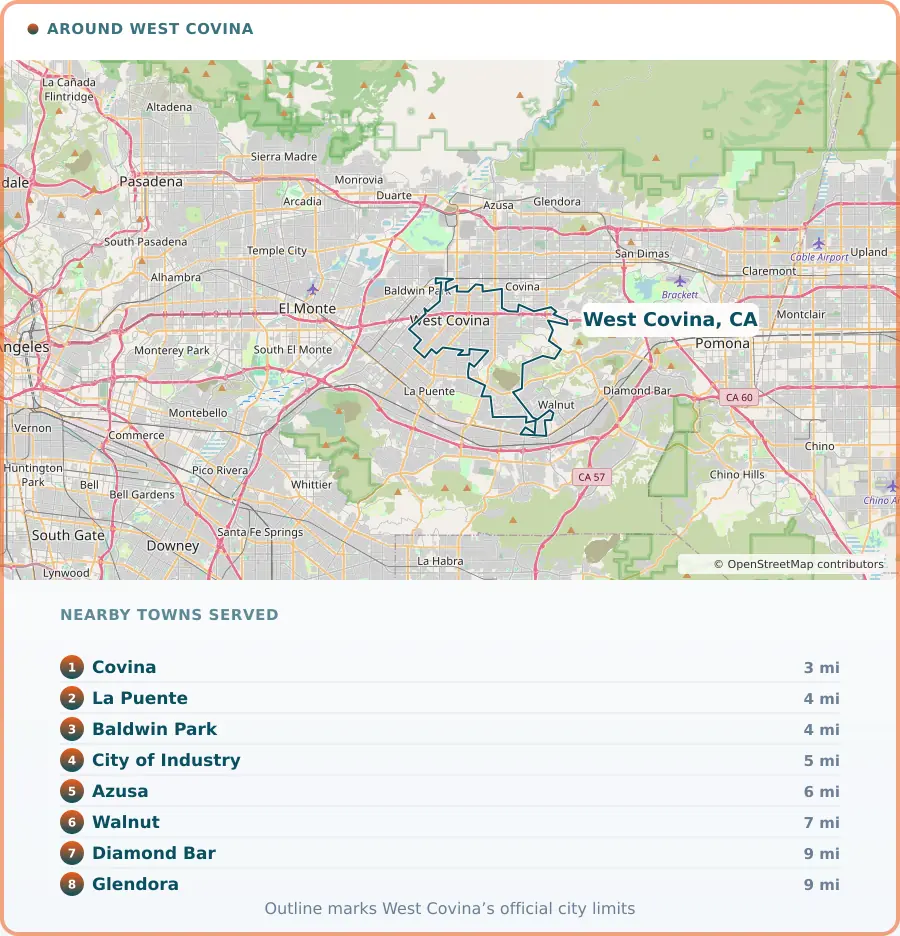
West Covina, CA is the centre of the service area, which extends to 8 surrounding towns. The map shows how far that reaches.
West Covina, CA Information
Tucked into the San Gabriel Valley east of Los Angeles, West Covina, CA is home to roughly 115,900 residents who enjoy a blend of suburban neighborhoods and bustling commerce. Hillside pockets like South Hills and Shadow Oak give the city a quieter, residential character, while major corridors nearby keep daily life connected to the wider valley.
Shopping fuels much of the local economy, with Westfield West Covina and Eastland Center drawing steady traffic alongside retailers such as Walmart, Costco, Target, and The Home Depot. Healthcare is another pillar, anchored by Emanate Health Queen of the Valley Hospital and Kaiser Permanente, while automotive dealerships, logistics operations, and public employers like the city government and West Covina Unified School District round out a diverse, hardworking community.
Photo: ASDFGH, CC BY-SA 4.0