

Attic Mold Removal in West Covina, CA
West Covina's inland San Gabriel Valley location means morning and evening humidity lingers even during dry months, and the region's established landscape irrigation practices can elevate moisture levels that find their way into older home structures. Many post-war properties in neighborhoods like South Hills and Cameron Park feature vented crawl spaces where ground moisture accumulates, and attics above those spaces become vulnerable to mold growth when ventilation and moisture barriers aren't properly maintained. Chapman Mold Remediation connects you with local independent providers who specialize in identifying and removing attic mold, helping protect your indoor air quality and the structural integrity of your home.
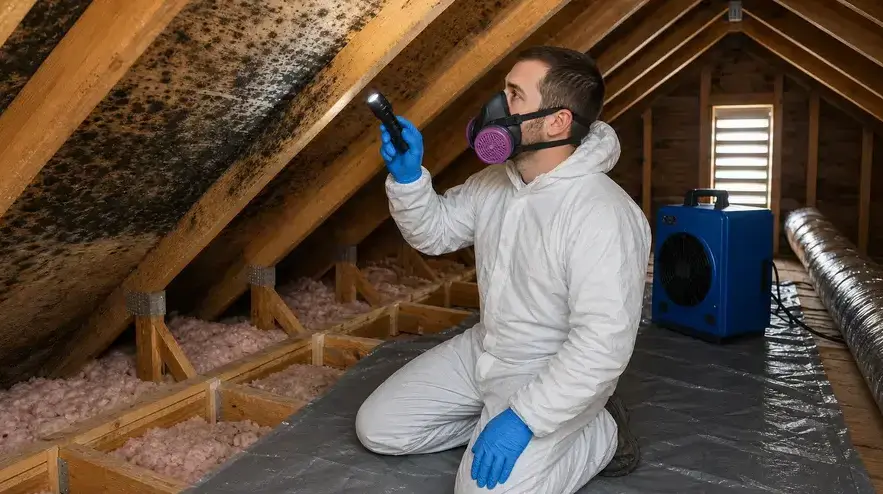
What gets cleaned in an attic, and what comes out
The honest answer to “does this come out, or can it be cleaned?” turns on two things — what the material is, and how many square feet are affected. Those are the two axes of the EPA’s own remediation table, reproduced below for the materials usually found in an attic.
| Material | Under 10 sq ftabout a cabinet door, or one ceiling tile | 10 to 100 sq ftroughly one wall, or a small bathroom | Over 100 sq ftmore than one room's worth of surface |
|---|---|---|---|
| Wood surfacesroof sheathing, rafters and trussesEPA, Table 2 | Wet vacuumDamp wipeHEPA vacuum | Wet vacuumDamp wipeHEPA vacuum | Wet vacuumDamp wipeHEPA vacuumRemove and discard |
| Wallboardthe ceiling drywall below, seen from aboveEPA, Table 2 | HEPA vacuum | HEPA vacuumRemove and discard | HEPA vacuumRemove and discard |
What those methods mean, in EPA's words
- Wet vacuum
Wet vacuums are vacuum cleaners designed to collect water. They can be used to remove water from floors, carpets and hard surfaces where water has accumulated.
EPA, cleanup methods- Damp wipe
Mold can generally be removed from nonporous (hard) surfaces by wiping or scrubbing with water, or water and detergent.
EPA, cleanup methods- HEPA vacuum
HEPA (High-Efficiency Particulate Air) vacuums are recommended for final cleanup of remediation areas after materials have been thoroughly dried and contaminated materials removed.
EPA, cleanup methods- Remove and discard
Building materials and furnishings that are contaminated with mold growth and are not salvageable should be double-bagged using 6-mil polyethylene sheeting.
EPA, cleanup methods
Removed and replaced, whatever the area
- Fiberglass or other insulation — batt or blown insulation across the attic floor.
Fiber glass, or any other insulation material that is wet or visibly moldy (or if an unacceptable odor is present) should be removed and replaced by a qualified heating and cooling system contractor.
EPA, air duct cleaningEPA states this in its heating-and-cooling guidance and it is quoted here as written. Its water-damage table reaches the same conclusion for both fiberglass and cellulose insulation. - Insulated air ducts — insulated HVAC ducts run through the roof space.
If you have insulated air ducts and the insulation gets wet or moldy it cannot be effectively cleaned and should be removed and replaced.
EPA, air duct cleaningThe affected runs are what get replaced — not necessarily the whole system.
These guidelines are for damage caused by clean water. If you know or suspect that the water source is contaminated with sewage, or chemical or biological pollutants, then Personal Protective Equipment and containment are required by OSHA.
EPA, Table 1Porous materials that are wet and have mold growing on them may have to be discarded.
EPA, cleanup methodsMold can grow on wood, drywall, carpet and furniture if they remain wet for more than 24 hours.
EPA, flood cleanup
Attic mold is usually a ventilation fault rather than a leak — most often a bathroom fan discharging into the attic, or soffit vents blocked by insulation. The sheathing and rafters are wood, so they can often be cleaned and kept. The insulation underneath them cannot, and nor can any insulated duct running through the space.
West Covina sees only around 0 freezing nights a year, which makes summer condensation the more likely story than winter.Source: NOAA 1991-2020 Climate Normals, PASADENA, CA US station (5.9 mi from West Covina)
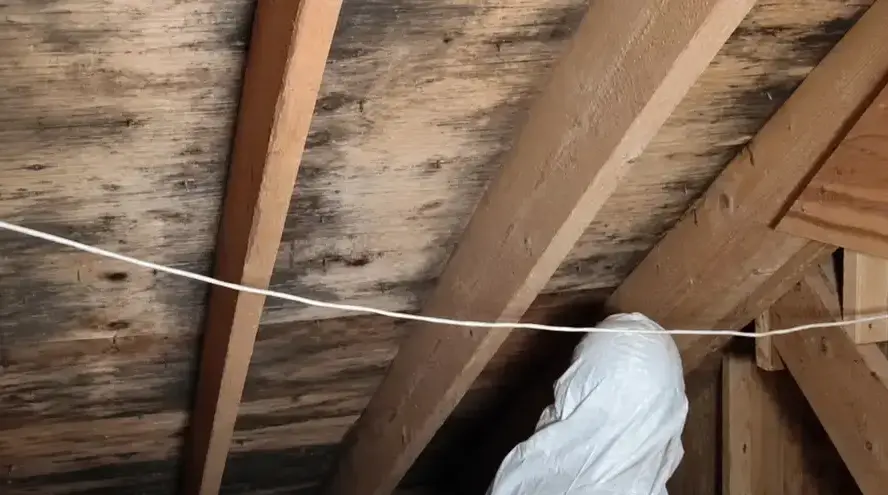
Attic Mold Removal for West Covina Homes
West Covina homeowners often face moisture challenges that create ideal conditions for mold growth in attic spaces. The San Gabriel Valley's inland climate brings morning and evening humidity that can linger even during dry seasons, and combined with the widespread landscape irrigation common throughout residential neighborhoods, moisture levels in attics—especially in older post-war construction—can remain elevated enough to support mold development. Vented crawl spaces and attic cavities are particularly vulnerable to trapping ground and air moisture when ventilation is inadequate or blocked. Left unaddressed, attic mold compromises indoor air quality and can affect the structural integrity of roof framing and insulation, making prompt removal and moisture control essential for homeowners across West Covina, from South Hills to Shadow Oak and beyond.
Chapman Mold Remediation connects West Covina property owners with independent local providers who specialize in attic mold removal tailored to the specific conditions of your home. These professionals begin with a thorough inspection to identify mold extent, moisture sources, and ventilation gaps, then implement containment and removal protocols designed to protect your family and preserve your home's structure. Beyond removal, they address the underlying moisture conditions—whether through improved attic ventilation, dehumidification, or drainage correction—to reduce the likelihood of recurrence. If related moisture or mold concerns exist elsewhere in your home, your provider can assess those as well. Starting with a local assessment puts you on the path to cleaner, healthier indoor air and lasting peace of mind.
Why West Covina Property Owners Choose Chapman Mold Remediation
Fast Local Attic Mold Removal
Chapman connects you with independent local providers ready to address attic mold growth quickly. Fast response means less time for moisture and mold to spread through your home's upper spaces.
Thorough Attic Mold Treatment
Attic mold removal requires careful inspection, containment, and complete remediation. Chapman's network focuses on identifying hidden growth and removing it safely without disturbing spores throughout your home.
Clear Communication Throughout
Attic mold removal involves detailed inspection findings and treatment steps. Chapman ensures you understand what's found, why it matters, and how the independent provider plans to restore your attic space safely.
Elevated Humidity, Real Attic Risk
West Covina's inland location and irrigation patterns keep morning and evening humidity high, creating conditions where attic moisture accumulates. Vented crawl spaces in older homes compound moisture problems—attic mold removal addresses upper-space growth before it worsens.
How Our Attic Mold Removal Process Works
Schedule Your Attic Mold Removal Visit
Contact Chapman Mold Remediation to describe attic mold concerns in your West Covina home. We'll connect you with a local independent provider who can arrange a prompt inspection of your attic space.
Get Your Attic Assessed for Mold
The provider will inspect your attic to identify mold growth, moisture sources, and ventilation issues. Morning and evening humidity from inland moisture patterns common to the San Gabriel Valley can accelerate mold in poorly ventilated attic spaces, so a thorough evaluation is essential.
Complete Attic Mold Removal and Monitoring
Once mold is confirmed, the provider will remove affected materials, address moisture entry points, and improve attic ventilation to reduce future growth. They'll discuss follow-up care to help maintain a dry, mold-resistant attic environment.
Dealing with Attic Mold Removal in West Covina? Get fast, professional help.
Call Now — (626) 889-7446Attic Mold Removal Services in West Covina
West Covina's inland San Gabriel Valley location means homes here experience elevated humidity during morning and evening hours, even in the region's typically mild, semi-arid climate. This persistent moisture—driven by marine-layer air and the heavy landscape irrigation common throughout the area—creates conditions where attic mold can develop and spread if ventilation and moisture control aren't maintained. Many of the city's older post-war homes feature vented crawl spaces that can trap ground moisture, and when that dampness rises through a structure, attics become particularly vulnerable to mold colonization. Thorough attic mold removal in West Covina requires understanding these local moisture patterns and ensuring proper air circulation and drainage after remediation.
Whether you're in an established neighborhood like South Hills or a more recent subdivision, the morning and evening humidity that characterizes West Covina means attic inspections should be part of regular home maintenance. Chapman Mold Remediation connects West Covina property owners with local independent mold removal providers who understand how the valley's climate affects attic conditions and can recommend inspection and remediation strategies suited to your home's age and ventilation design. When mold growth is discovered, prompt removal by a qualified local provider helps protect indoor air quality and prevent the spread of mold spores throughout your home.
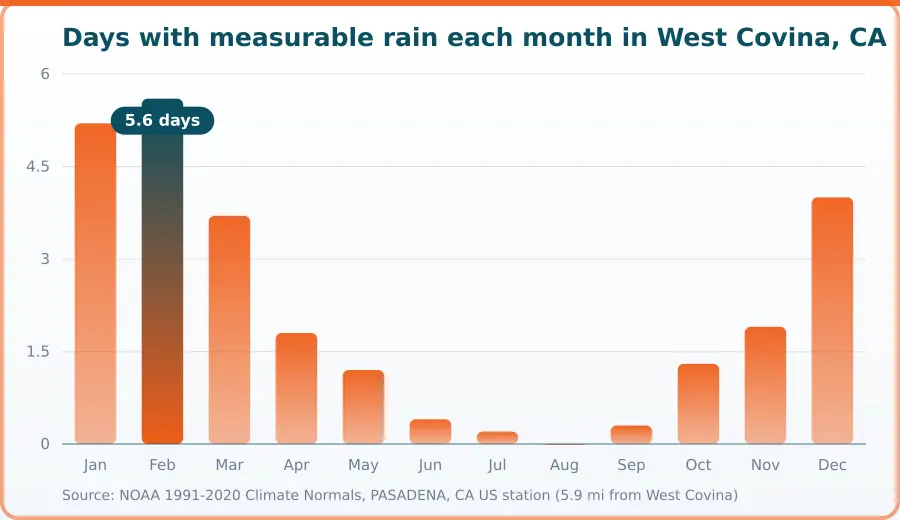
| Period | Days with measurable rain by month (days) |
|---|---|
| Jan | 5.2 |
| Feb | 5.6 |
| Mar | 3.7 |
| Apr | 1.8 |
| May | 1.2 |
| Jun | 0.4 |
| Jul | 0.2 |
| Aug | 0 |
| Sep | 0.3 |
| Oct | 1.3 |
| Nov | 1.9 |
| Dec | 4 |
Source: NOAA 1991-2020 Climate Normals, PASADENA, CA US station (5.9 mi from West Covina). Retrieved October 27, 2026.
Attic Mold Removal Across West Covina Seasons
Spring: Moisture & Growth
Spring rains and warming temperatures create ideal conditions for attic mold to accelerate. Morning and evening humidity lingers in older post-war homes, especially those with vented crawl spaces where ground moisture can rise into upper structures. Chapman connects you with local providers who inspect and remove active mold before summer heat intensifies.
Summer: Heat & Visibility
Intense heat can cause attic mold to become more visible as moisture patterns shift and affected wood darkens. Thermal stress on attic framing may worsen existing damage if mold has already colonized structural areas. Local remediation providers accessible through Chapman address summer-discovered infestations before fall humidity returns.
Fall: Seasonal Inspection
Fall cooling and seasonal maintenance routines make attic inspection ideal before winter. Property owners often discover mold damage that went unnoticed during warmer months. Chapman's referral network connects you with providers who can evaluate and remediate fall-found attic mold promptly.
Winter: Moisture Buildup
Winter's cooler temperatures can trap condensation in attic spaces, especially where ventilation is poor or blocked. Stagnant moisture and cooler air create prolonged conditions favoring mold colonization in rafters and insulation. Chapman links West Covina property owners with local removal specialists who address winter moisture issues and prevent spring expansion.
Attic Mold Removal FAQs — West Covina, CA
Attic mold removal typically begins with a thorough inspection to identify affected areas, moisture sources, and extent of growth. The independent local provider will contain the work area, safely remove contaminated insulation or materials, treat surfaces, address ventilation issues, and verify the space is dry before restoration. The goal is complete removal and prevention of regrowth by tackling the moisture source itself.
Chapman Mold Remediation connects West Covina property owners with local independent providers who can respond to attic mold concerns. Once you submit your situation, local providers in your area can be reached to discuss timelines and scheduling. Response speed depends on provider availability and your property's specific circumstances, so contacting them directly ensures the fastest path forward.
Pricing for attic mold removal varies based on the size of the affected area, severity of the infestation, materials that need replacement (insulation, drywall, framing), and the scope of moisture remediation required. Accessibility of your attic, structural complexity, and whether ventilation upgrades are needed also influence the final cost. The independent provider you're connected with will assess your space and discuss pricing details.
Before work begins, clear attic access and remove personal items stored there if safe to do so. Keep household members and pets away from the work area during removal. Discuss with the independent provider whether you should seal HVAC returns or take other precautions to protect your home's air quality during the process. They'll provide specific preparation instructions tailored to your situation.
After attic mold removal, controlling moisture is essential. Ensure proper attic ventilation, check for roof leaks regularly, and maintain gutters and downspouts to direct water away from your home. Insulation must be installed correctly to prevent condensation. The independent provider will identify moisture sources during removal; addressing those root causes—rather than just treating the mold—is key to preventing recurrence.
West Covina's inland location keeps humidity elevated during mornings and evenings even in drier months, particularly when landscape irrigation is active. This persistent moisture, combined with older homes' vented crawl spaces and attic ventilation systems, can create ideal conditions for mold growth if those spaces aren't well maintained. Addressing moisture control year-round—not just seasonally—helps prevent attic mold problems.
Homeowner Safety Toolkit
Verify Your West Covina, CA Mold Remediation Company
Before you hire anyone, use these independent national resources to confirm credentials, standards, and track record.
BBB
Look up any mold remediation company's complaint history, customer reviews, and accreditation status — a free, independent check before you hire.
Check StandingCDC
Covers the health effects of mold exposure and safe cleanup practices, separate from the remediation work itself — useful if anyone in the home has respiratory symptoms.
Mold Health GuideIICRC
Publishes the S520 standard for professional mold remediation. Confirm a company's technicians hold real, current IICRC certification before you hire them.
Verify CertificationDealing with Attic Mold Removal in West Covina, CA? Call (626) 889-7446 for 24/7 help.
Call Now — (626) 889-7446Areas We Serve in West Covina, California
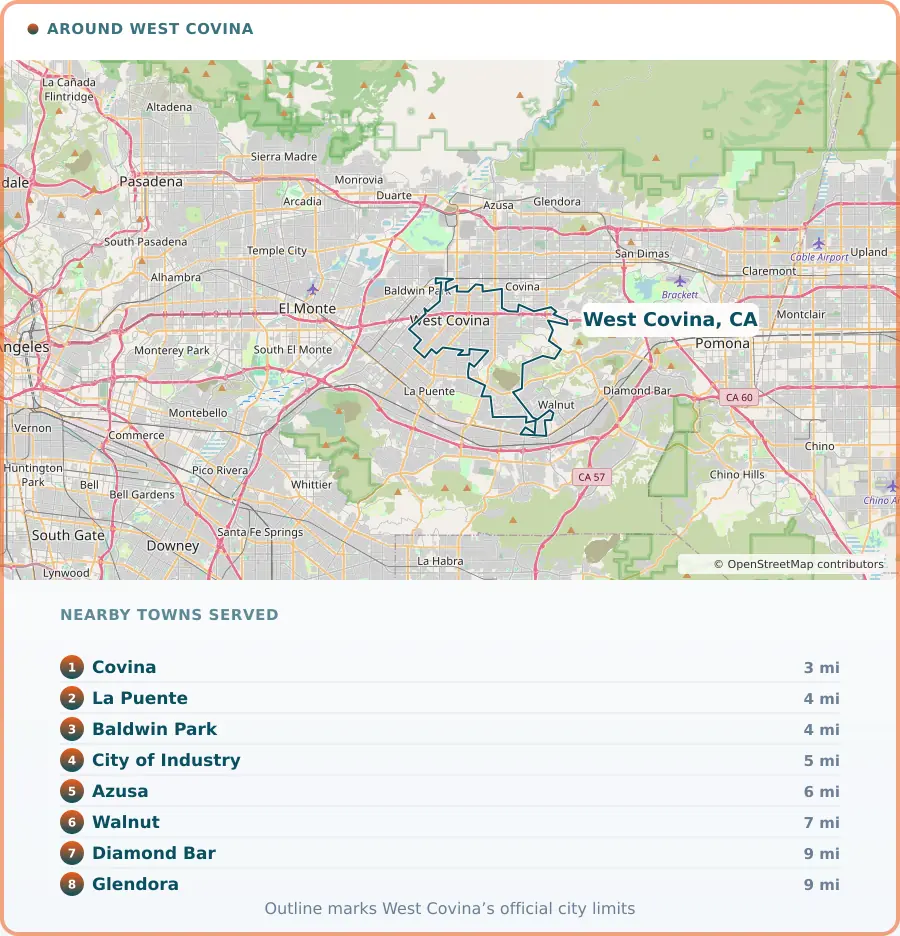
West Covina, CA is the centre of the service area, which extends to 8 surrounding towns. The map shows how far that reaches.
West Covina, CA Information
Tucked into the San Gabriel Valley east of Los Angeles, West Covina, CA is home to roughly 115,900 residents who enjoy a blend of suburban neighborhoods and bustling commerce. Hillside pockets like South Hills and Shadow Oak give the city a quieter, residential character, while major corridors nearby keep daily life connected to the wider valley.
Shopping fuels much of the local economy, with Westfield West Covina and Eastland Center drawing steady traffic alongside retailers such as Walmart, Costco, Target, and The Home Depot. Healthcare is another pillar, anchored by Emanate Health Queen of the Valley Hospital and Kaiser Permanente, while automotive dealerships, logistics operations, and public employers like the city government and West Covina Unified School District round out a diverse, hardworking community.

Photo: ASDFGH, CC BY-SA 4.0